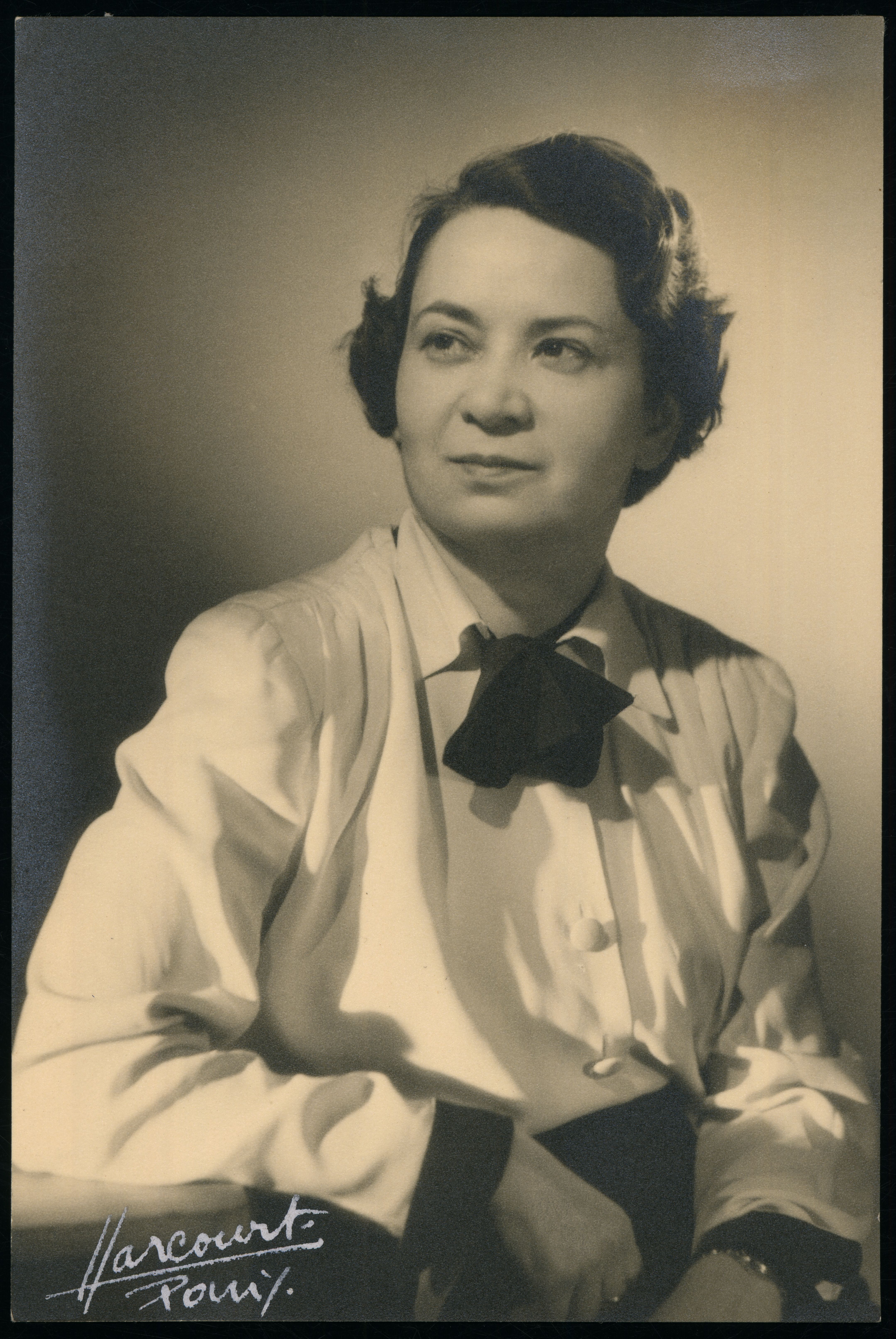
Born into a Protestant family in southeastern France, Yvonne Oddon was a visionary librarian, educated first at the École américaine de bibliothécaires in Paris, then in the United States. After returning to Paris, she was tasked, in 1929, with the reorganization of the library of the Musée d’ethnographie du Trocadéro (Trocadéro Museum of Ethnography), now known as the Musée de l’Homme. This is where she was working when the German army invaded Paris in June 1940; together with her colleagues, she chose to remain, despite the exodus, going so far as to live on site to protect the collections.
With linguist Boris Vildé and anthropologist Anatole Lewitsky, Oddon soon founded one of the first Paris-based Resistance groups, later called the “Musée de l’Homme network”. In addition to disseminating military information and aiding prisoner escapes, she made a key contribution to the underground newspaper Résistance, suggesting its name in reference to Marie Durand, an eighteenth-century Huguenot prisoner whose faith she shared, and who is credited with having carved the word “Résister” into the stone of the Tour de Constance where she was imprisoned for 38 years.
Arrested on February 10, 1941, Oddon was sentenced to death one year later along with nine others from the Musée de l’Homme network, including her fiancé, Anatole Lewitsky. Unlike the men, her sentence was commuted to hard labour; her year of detention in three different French prisons (Cherche-Midi, La Santé, Fresnes) was followed by three years of deportation to four German prisons (Karlsruhe, Anrath, Lübeck, Cottbus) and two Nazi concentration camps (Ravensbrück and Mauthausen, from which she was liberated by the international Red Cross in April 1945).
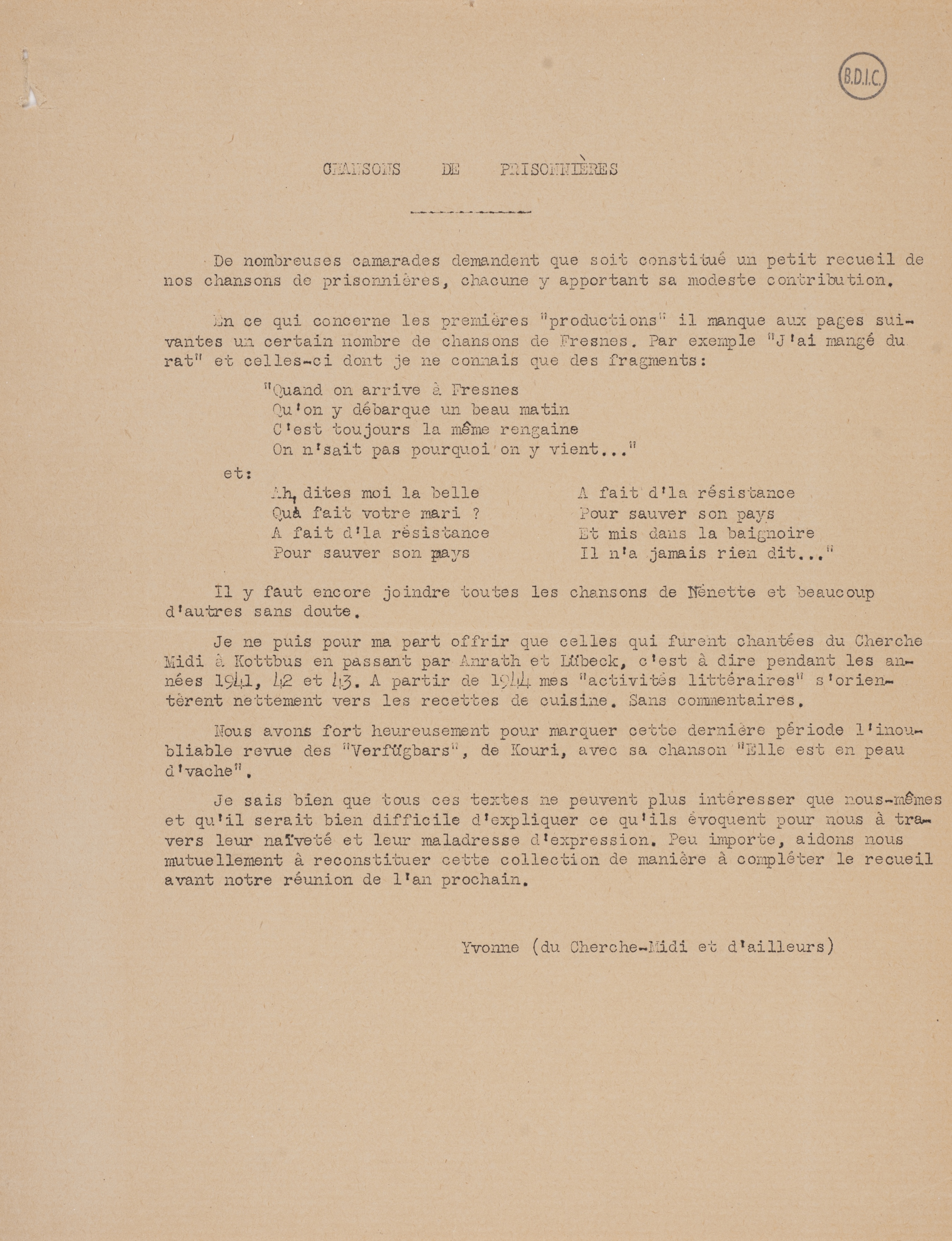
Upon returning to France, Oddon made it her mission to share her story. In addition to giving lectures and writing about her memories of the Resistance, she joined the board of the Association nationale des anciennes déportées et internées de la Résistance (ADIR), a vital material and emotional support network for women who were returning utterly destitute from the horrors of war. It was as part of the ADIR’s activities that Oddon transcribed the songs documented here, at the request of “many friends” who wished, as she writes on the title page, “that a small collection be made of [their] prison songs”. After the war, Oddon resumed her role as director of the library of the Musée de l’Homme, while also participating in UNESCO missions; in 1981, she was appointed Commander of the Legion of Honour.